

Newry is located inland of Ireland's northeastern coastline, three miles up the Newry River and Clanrye River which flows into the head of the Carlingford Lough inlet. It is a provincial city reached by way of a canal that is accessed via a single lock above the port of Warrenpoint and solely used by leisure craft. The city provides berths alongside its quay in a basin at the heart of the city.
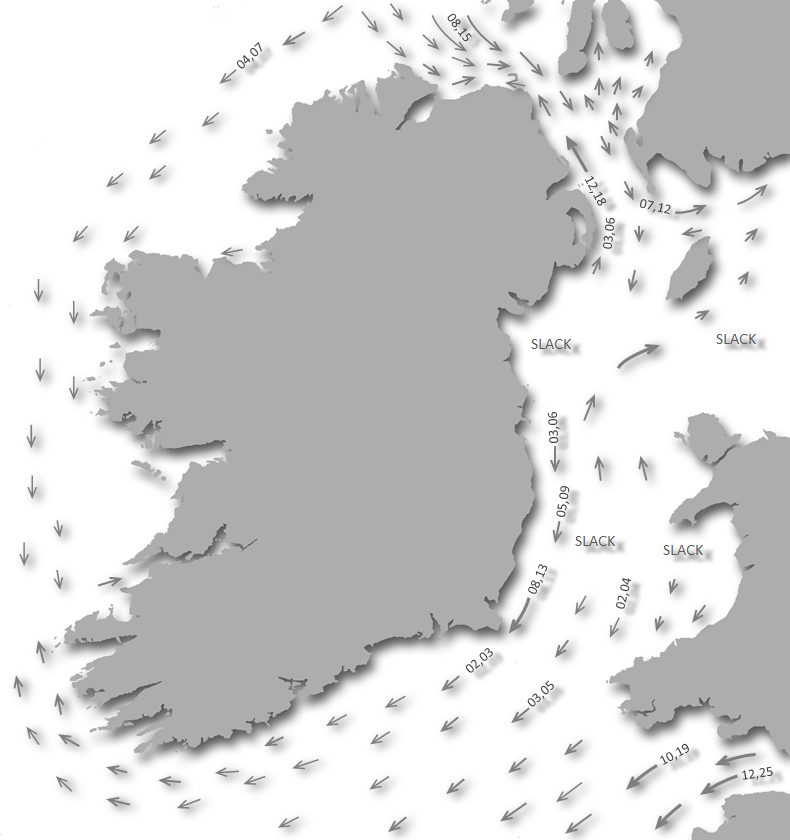
Set thirteen miles inland within the Irish Sea and set in a secure locked-in canal Newry offers complete protection from all conditions. The canal is accessed via the Port of Warrenpoint’s well-marked deep water shipping channel which runs the entire length of the lough and continues to the lock. Careful navigation is generally required for this location owing to exceptional currents when entering the lower Lough from the Irish Sea. The lock can only be approached at high water after all transit and berthing arrangements are completed well in advance.

Keyfacts for Newry


Last modified
September 9th 2022 Summary* Restrictions apply
A completely protected location with careful navigation required for access.Facilities


Nature


Considerations


Position and approaches

Expand to new tab or fullscreen
Haven position
 54° 10.064' N, 006° 20.320' W
At the town quay outside the Quays’ Shopping centre.
What is the initial fix?
The following Carlingford Lough Entrance Initial Fix will set up a final approach:
 54° 0.100' N, 006° 2.052' W



What are the key points of the approach?
Offshore details are available in eastern Ireland’s Coastal Overview for Strangford Lough to Dublin Bay  and directions for the run up the lough are available in the Warrenpoint
  entry.
and directions for the run up the lough are available in the Warrenpoint entry.- Bookings must be carried out at least 48 hours prior to arrival with Newry Tourist Information.
- Victoria Lock is just under 2 miles upstream from the Port of Warrenpoint at the head of Carlingford Lough and only approachable at high water. The Lock gates are operable 1 hour before to 1 hour after High water, but the council limits their use to daylight hours.
Not what you need?
Click the 'Next' and 'Previous' buttons to progress through neighbouring havens in a coastal 'clockwise' or 'anti-clockwise' sequence. Below are the ten nearest havens to Newry for your convenience.
Ten nearest havens by straight line charted distance and bearing:
- Warrenpoint - 5.2 nautical miles SE
- Omeath - 5.6 nautical miles SE
- Greer’s Quay - 6.8 nautical miles SSE
- Rostrevor - 7.3 nautical miles SE
- Killowen - 7.6 nautical miles SE
- Carlingford Marina - 8.7 nautical miles SE
- Carlingford Harbour - 9.3 nautical miles SE
- Dundalk - 9.7 nautical miles S
- Greencastle - 11.4 nautical miles SE
- Giles Quay - 11.5 nautical miles SSE
These havens are ordered by straight line charted distance and bearing, and can be reordered by compass direction or coastal sequence:
- Warrenpoint - 5.2 miles SE
- Omeath - 5.6 miles SE
- Greer’s Quay - 6.8 miles SSE
- Rostrevor - 7.3 miles SE
- Killowen - 7.6 miles SE
- Carlingford Marina - 8.7 miles SE
- Carlingford Harbour - 9.3 miles SE
- Dundalk - 9.7 miles S
- Greencastle - 11.4 miles SE
- Giles Quay - 11.5 miles SSE


What's the story here?
 The Newry Ship Canal and Albert Basin in the city
Image: Martin Hess via CC BY 2.0
Newry is a city in Northern Ireland, divided by the Newry River and Clanrye River into the counties Armagh and Down, it has a population in excess of 25,000. The Albert Basin has a quay length of 186 metres that is set in the heart of the city that is within short walking distance of the city’s retail and business centre. It is reached by entering the Victoria Lock, on its seaward end, and transiting the Newry Ship Canal to the town basin.
 Victoria Lock
Image: Eric Jones via CC BY-SA 2.0
Victoria Lock is situated on the southern shore of the Newry River and Clanrye River, just under 2 miles upstream from the Port of Warrenpoint. The maximum size of vessel that can enter the Newry Ship Canal is 60 metres LOA and 10 metres in width. The 3.2-mile run from the lock to the Albert Basin has a least depth of 3.3 metres, is 25 metres wide and there are no height restrictions. In the past, the canal was used by commercial coasters of up to 60 metres LOA so the Albert Basin is capacious and has ample turning capability.
 Closing the lock gate of the Albert Lock
Image: Brian Lennon
However, the silt-chokedNewry River and Clanrye River can dry up to a ½ mile below the lock and a small bank with a drying height of 1.4 metres lies outside its entrance. Hence the transit can only be made at high water. Victoria Lock was automated in 2007 and a council official must open and close the lock gates. This is 1 hour before to 1 hour after high water, and the council limits their use to daylight hours. Consequently, it is most likely that the canal may only be entered or exited once a day. As such it may be advisable to plan on using Warrenpoint as a staging berth for the canal transit. If possible, it is best to arrange a transit during normal council working hours as an out-of-hours operation charge could be applied.
 Yachts in the chamber of the Victoria Lock
Image: Brian Lennon
The essential first step for any planned visit to Newry is to contact Newry Tourist Information to obtain approval. Advance bookings must be carried out at least 48 hours prior to arrival. Therefore the transit must be all prearranged in advance and the entrance made at high water. Contact: Newry Tourist Information Centre, Bagenal’s Castle, Newry,
 +44 28 3031 3170, +44 330 137 4046,
  newrytic@newryandmourne.gov.uk.
 Alongside in Albert Basin
Image: Michael Harpur
The Tourism Office will provide a booking form and other useful procedural and navigation documentation. Their booking form must be completed, signed and returned 48 hours prior to the planned arrival or departure time. Owners may be asked to send a copy of the vessel's insurance details as part of this process. All vessels entering the Lock Chamber and Ship Canal, must have and provide a minimum of £2 million in Public Liability Insurance and adequate salvage insurance. All berthing/transit fee payments must be made in Sterling either on arrival or during the stay at the Albert Basin in Newry.
Once this is all in hand then it is simply a matter of arriving at the designated timing, locking in and proceeding up the canal to the basin.
How to get in?
 Warrenpoint at the head of Carlingford Lough
Image: Michael Harpur
 Seaward approaches are detailed in eastern Ireland’s coastal overview for Strangford Lough to Dublin Bay . Use the directions provided for Warrenpoint for approaches and the run up the Lough.
All vessels intending on passing through Warrenpoint Harbour should notify Warrenpoint Harbour on
 Ch. 12 (24 hrs) and 16 [Warrenpoint Harbour Radio] at the following points:
- • Inward bound – No. 25 buoy
- • Outward bound – Upon Departing Victoria Lock Chamber and entering the Newry River and Clanrye River.
Vessels should not proceed past these points until given clearance by the harbour office and must comply with any further instruction that it gives. A listening watch should be kept by all vessels on VHF Ch. 12 when in the vicinity of Warrenpoint Harbour.
 Proceed upriver once Warrenpoint Harbour Radio has provided permission
Image: Michael Harpur
Make certain to immediately inform the council should there be any delay that will cause the tide for the prearranged journey to be missed. In this event, it is best to take a berth at Warrenpoint and rearrange the transit.
 Yachts proceeding past Warrenpoint towards Narrow Water
Image: Brian Lennon
If all is in hand proceed up the pretty waterway that is very well marked by initially following Warrenpoint's stone tower leading marks and then the river buoys. Unfortunately, this area of the river, from Warrenpoint to the Victoria Lock, is not charted on the key local British Admiralty 2800 chart but being so well marked this absence presents no material issue. Nevertheless, this waterway is full of mud and sandbanks and subject to silting so take specific care if moving outside the marked channel.
 Astern view of Narrow Water Castle a mile above Warrenpoint
Image: Tourism NI
Victoria Lock is located on the southern shore of the river approximately two miles beyond the port of Warrenpoint. Vessels approaching the lock at high water should expect to encounter a fast-flowing current that streams broadly in line with the direction of the river. The rate will be easily seen on the navigation buoys.
Victoria Lock – position: 54° 07.583’N, 006° 18.330’W
 Yachts approaching Victoria Lock
Image: Brian Lennon
A point to note is a sandbar that dries to 1.4 metres that have emerged close south of the lock’s entrance; where the river and the lock’s channel converge. A depth of at least 2.5 metres over this hump will be found for about one hour on either side of high water Neaps, or two hours during Springs.
Expect a lift in the lock chamber to be somewhere between 2 and 3 metres depending upon the level of the river’s high water mark.
 Proceeding to the Albert Dock above the Victoria Lock
 Image: Brian Lennon
Beyond the lock, the canal provides a least depth of 3.3 metres for the 3.2 miles up to Newry’s Albert Basin. Once through Victoria Lough, it is simply a matter of enjoying the canal passage up the valley between the mountains. A maximum boat speed of 4 knots should not be exceeded at any time in the canal.
 Approaching Albert Dock
 Image: Brian Lennon
The Albert Basin, provides a deep water quay in the heart of Newry’s vibrant retail centre which includes overlooking Buttercrane and Quays shopping centres. Yachts alongside Albert Dock
Image: Michael Harpur
Berth or raft up as convenient along the deep water quay where ample mooring bollards will be found.
Why visit here?
Newry derives its name from its Irish name 'Iúr Cinn Trá' meaning 'Yew at the strand's head', the short form of which is 'An tIúr' meaning 'the Yew'. It is believed that this name goes back to the 5th century and the nation’s patron saint. Legend has it that St Patrick planted a Yew tree here as he arrived up the river and thereby founded a settlement with a monastic base. Kilnasaggart Pillar Stone
Image: Tourism Ireland
There is no doubt that Newry is one of Ireland's oldest towns and it predates the vast majority of its current buildings. Located at the head of the 'Moyry Pass', better known as the 'Gap of the North', between Slieve Gullion, the Cooley Mountains and Dundalk Bay, it was a well-placed settlement. The 'Gap of the North' was created by the last Ice Age leaving a close chain of drumlins across Ireland with just one break. With much of the terrain wooded and mountainous, in ancient times this location was the only entry or exit to Ulster. Through this central pass, the men of Ulster sailed forth to harry the tribes of Leinster in the days of the 'Fianna' legends. The Gap is also linked to several episodes in the epic Cattle Raid of Cooley. A tall granite graveyard pillar dating to AD 700, the Kilnasaggart Pillar Stone, marks this national crossroads. Standing more than two metres high it is believed to be the earliest historically dated inscribed stone in Ireland. The geography and landscape determined the nation’s history, and certainly the development of the small settlement at Newry.
 Bagenal's Castle today now home to the Newry and Mourne Museum
Image: Tourism Ireland
By contrast, its next denizens, the Vikings, came by sea as did the Normans in the 12th century as they extended their conquest nationally. They recognised the strategic importance of Newry and founded a base here in 1144 alongside a Cistercian monastery. A medieval trading town grew centred on the monastery in the vicinity of Bagenal’s Castle which itself dates back to 1560. But from the late 16th century to the 1690s, the development of Newry was affected by the political and social uncertainty caused by the great changes in Irish society which followed the Flight of the Earls and the Plantation of Ulster.
 Ship at Merchant’s Quay 1870
Image: National Library of Ireland on The Commons
This was particularly the case for Newry on account of the town's strategic position that caused it to be repeatedly destroyed in the wars for the control of the north. Most notably it was the scene of a great battle between Lord Mountjoy and Hugh O’Neill in 1600. As a result of this, except for Bagenal’s Castle, medieval Newry has been mostly destroyed and superseded by a new town planned along the river. The town encountered today grew from a garrison and market town. Industrialisation saw Newry become an important linen textile centre and a port that was largely driven by the construction of the Newry Ship Canal in the decade 1731 to 1741.
 The outer gate of the Victoria Lock
Image: Eric Jones via CC BY-SA 2.0
The epic canal was an ambitious project and it was the first summit-level canal in Britain or Ireland. Its objective was to provide a transport route from the Tyrone coalfields to Dublin to enable the city to become self-sufficient in coal. The canal, in its full extent, linked the Tyrone coalfields, via Lough Neagh and the River Bann. When it became operational Newry grew to be the fourth most important port nationally surpassing Belfast and Derry with trading links to the West Indies, Newfoundland and the Baltic Sea. Warehouses were built on both sides of the canal to store goods and a new cosmopolitan merchant elite came to the town.
 The Victoria Lock chamber retains its period looks
Image: CC0
But despite the magnificent achievement the Newry Canal represented its commercially viable operational lifespan was remarkably short. After an initial period of productivity, output from the coal mines declined and they were finally closed down. Before that, a railway laid right alongside almost the entire length of the canal had become the preferred method of moving freight in the 20th century.
 Newry's Town Hall straddling the Clanrye River
Image: Tourism Ireland
Trade continued out of Newry during the First and Second World Wars despite the risks from submarine and aerial attacks. However, from the mid-1950s onwards, economic conditions, patterns in ship ownership and trade became more competitive disadvantaging the port. Boats continued to have access to the town until 1956, with the bridges being raised and lowered as required. But, by then, it was clear that the port of Newry could not accommodate large ocean-going vessels and the decision was made to phase out Newry port and improve the port facilities at Warrenpoint. The ship canal would finally close in 1974 and new fixed bridges replaced the older, swing bridges. Newry's former warehouses then found new functions as shops and apartments.
 Cathedral of Saint Patrick and Saint Colman
Image: JohnArmagh via ASA 3.0
Today the natural setting of Newry, located in the valley of the Newry River and Clanrye River, gives its centre a distinctive backdrop of valley slopes. The city centre itself has many fine buildings, the most iconic of which is the Town Hall that uniquely straddles the Clanrye River. Other important landmarks are the imposing granite Cathedral of St Patrick and St Colman, as well as the recently restored Bagenal’s Castle on Abbey Way. Newry has other, lesser well-known buildings that are just as integral to its character. These include former warehousing on Sugar Island and Merchant’s Quay. Although often modest in scale, such buildings are a vital part of the city centre’s character. In March 2002, as part of Queen Elizabeth's Golden Jubilee celebrations, Newry was granted city status alongside Lisburn. In 2007 the ship canal was reopened to leisure boats and ships so they can moor at the Albert Basin. The canal itself continues beyond Newry towards the River Bann and Lough Neagh with the River Clanrye looping around County Down.
 Visitor boats alongside the Albert Basin
 Image: Michael Harpur
From a boating perspective, the canal journey, progressing up the seat of the valley between mountain ranges to the town, is a spectacular boating experience in itself. The journey commences with the magnificent Narrow Water situated about a mile from where the river enters Carlingford Lough. From the later 8th-Century onwards the Vikings had a raiding camp here which they used to raid further inland, particularly Armagh. It is today marked by the Narrow Water Castle tower house on the County Down bank that was built by the military forces of Queen Elizabeth I in the 1560s. It is one of the finest 16th-century buildings in Ireland today. Above this, the twin watercourses of the Clanrye River and Newry Canal, flowing side by side through to the city centre, are also remarkably attractive. The body of water and the city of Newry, lies between two designated Areas of Outstanding Natural Beauty (AONBs): the Mountains of Mourne in south Down and the Ring of Gullion in south Armagh. Unsurprisingly the word 'Clanrye' comes from the Irish 'An Gleann Rí' meaning 'The King's Valle'.
 The canal and the Clanrye River leading through the valley to Newry
Image: Eric Jones via CC BY-SA 2.0
The town quay is alongside the Buttercrane and Quays shopping centres, and the town has a reputation for being one of the best provincial shopping towns in Ireland. Hence it offers a vessel one of the most convenient and extensive shopping and provisioning locations on the east coast of Ireland. It also offers perfect security against all weather conditions with plenty to occupy visitors during a bad weather spell. Alongside the quay area, there are a host of attractions including a variety of pubs and restaurants all within a short stroll. Also being one of the province's oldest towns, it has a wide range of historical interests.
 Narrow Water Castle tower house
Image: Tourism Ireland
It also offers a wonderfully secure berth from which to explore the surrounding countryside. The Gateway to the North, nestling between two areas of outstanding natural beauty is a beautiful scenic area steeped in history, mythology and legend where you will find plenty to enjoy.
What facilities are available?
Electricity and water supply points are available along the quay, located on the wharf, but their use is subject to prior approval. Cables must not be left connected to the electricity supply when the boat is unoccupied.Newry is the fourth-largest city in Northern Ireland, the eighth in Ireland, and the "Basin" is situated in the heart of Newry’s retail centre which makes it one of the best locations for provisioning and shopping in the Carlingford Lough area, if not the best on the whole of the east coast. The Quays shopping centre, just beside the Albert Basin, also has a cinema and more importantly public toilets. There is a chandlery in the industrial estate on the other side of the river from the Quays. There is also a B&Q store although it's quite a distance from the basin.
Newry also has excellent railway connections, with the rail station just off the Camlough road offering cross border services on the Dublin-Belfast line – with international airports in both cities. It also has a major new bus station with a comprehensive bus service. Newry is on the main M1/A1 route from Dublin to Belfast. It is 34 miles (60 km) from Belfast and 67 miles (108 km) from Dublin.
Useful transport contacts in this area:
Newry Bus Station P: +44 28 30623531
Newry Train Station P: +44 28 30269271
Dundalk Train Station P: +353 42 933 5521
Dundalk Bus Station P: +353 42 9334075
Any security concerns?
The Albert Basin is an open quay with unrestricted public access at all times. Newry & Mourne District Council accepts no liability for vessels berthing there. Boat owners are responsible for their own security measures. However the basin is opposite the Quays Shopping Centre, that operates CCTV with security staff.With thanks to:
Brian McJury, Warrenpoint Harbour Master and Brian Lennon. Photography with thanks to Brian Lennon, Martin Hess and Eric Jones.Newry Ship Canal and Victoria Lock
Angling featuring views of the Newry Canal
About Newry
Newry derives its name from its Irish name 'Iúr Cinn Trá' meaning 'Yew at the strand's head', the short form of which is 'An tIúr' meaning 'the Yew'. It is believed that this name goes back to the 5th century and the nation’s patron saint. Legend has it that St Patrick planted a Yew tree here as he arrived up the river and thereby founded a settlement with a monastic base.
Kilnasaggart Pillar StoneImage: Tourism Ireland
There is no doubt that Newry is one of Ireland's oldest towns and it predates the vast majority of its current buildings. Located at the head of the 'Moyry Pass', better known as the 'Gap of the North', between Slieve Gullion, the Cooley Mountains and Dundalk Bay, it was a well-placed settlement. The 'Gap of the North' was created by the last Ice Age leaving a close chain of drumlins across Ireland with just one break. With much of the terrain wooded and mountainous, in ancient times this location was the only entry or exit to Ulster. Through this central pass, the men of Ulster sailed forth to harry the tribes of Leinster in the days of the 'Fianna' legends. The Gap is also linked to several episodes in the epic Cattle Raid of Cooley. A tall granite graveyard pillar dating to AD 700, the Kilnasaggart Pillar Stone, marks this national crossroads. Standing more than two metres high it is believed to be the earliest historically dated inscribed stone in Ireland. The geography and landscape determined the nation’s history, and certainly the development of the small settlement at Newry.
Bagenal's Castle today now home to the Newry and Mourne MuseumImage: Tourism Ireland
By contrast, its next denizens, the Vikings, came by sea as did the Normans in the 12th century as they extended their conquest nationally. They recognised the strategic importance of Newry and founded a base here in 1144 alongside a Cistercian monastery. A medieval trading town grew centred on the monastery in the vicinity of Bagenal’s Castle which itself dates back to 1560. But from the late 16th century to the 1690s, the development of Newry was affected by the political and social uncertainty caused by the great changes in Irish society which followed the Flight of the Earls and the Plantation of Ulster.
Ship at Merchant’s Quay 1870Image: National Library of Ireland on The Commons
This was particularly the case for Newry on account of the town's strategic position that caused it to be repeatedly destroyed in the wars for the control of the north. Most notably it was the scene of a great battle between Lord Mountjoy and Hugh O’Neill in 1600. As a result of this, except for Bagenal’s Castle, medieval Newry has been mostly destroyed and superseded by a new town planned along the river. The town encountered today grew from a garrison and market town. Industrialisation saw Newry become an important linen textile centre and a port that was largely driven by the construction of the Newry Ship Canal in the decade 1731 to 1741.
The outer gate of the Victoria LockImage: Eric Jones via CC BY-SA 2.0
The epic canal was an ambitious project and it was the first summit-level canal in Britain or Ireland. Its objective was to provide a transport route from the Tyrone coalfields to Dublin to enable the city to become self-sufficient in coal. The canal, in its full extent, linked the Tyrone coalfields, via Lough Neagh and the River Bann. When it became operational Newry grew to be the fourth most important port nationally surpassing Belfast and Derry with trading links to the West Indies, Newfoundland and the Baltic Sea. Warehouses were built on both sides of the canal to store goods and a new cosmopolitan merchant elite came to the town.
The Victoria Lock chamber retains its period looksImage: CC0
But despite the magnificent achievement the Newry Canal represented its commercially viable operational lifespan was remarkably short. After an initial period of productivity, output from the coal mines declined and they were finally closed down. Before that, a railway laid right alongside almost the entire length of the canal had become the preferred method of moving freight in the 20th century.
Newry's Town Hall straddling the Clanrye RiverImage: Tourism Ireland
Trade continued out of Newry during the First and Second World Wars despite the risks from submarine and aerial attacks. However, from the mid-1950s onwards, economic conditions, patterns in ship ownership and trade became more competitive disadvantaging the port. Boats continued to have access to the town until 1956, with the bridges being raised and lowered as required. But, by then, it was clear that the port of Newry could not accommodate large ocean-going vessels and the decision was made to phase out Newry port and improve the port facilities at Warrenpoint. The ship canal would finally close in 1974 and new fixed bridges replaced the older, swing bridges. Newry's former warehouses then found new functions as shops and apartments.
Cathedral of Saint Patrick and Saint ColmanImage: JohnArmagh via ASA 3.0
Today the natural setting of Newry, located in the valley of the Newry River and Clanrye River, gives its centre a distinctive backdrop of valley slopes. The city centre itself has many fine buildings, the most iconic of which is the Town Hall that uniquely straddles the Clanrye River. Other important landmarks are the imposing granite Cathedral of St Patrick and St Colman, as well as the recently restored Bagenal’s Castle on Abbey Way. Newry has other, lesser well-known buildings that are just as integral to its character. These include former warehousing on Sugar Island and Merchant’s Quay. Although often modest in scale, such buildings are a vital part of the city centre’s character. In March 2002, as part of Queen Elizabeth's Golden Jubilee celebrations, Newry was granted city status alongside Lisburn. In 2007 the ship canal was reopened to leisure boats and ships so they can moor at the Albert Basin. The canal itself continues beyond Newry towards the River Bann and Lough Neagh with the River Clanrye looping around County Down.
Visitor boats alongside the Albert Basin Image: Michael Harpur
From a boating perspective, the canal journey, progressing up the seat of the valley between mountain ranges to the town, is a spectacular boating experience in itself. The journey commences with the magnificent Narrow Water situated about a mile from where the river enters Carlingford Lough. From the later 8th-Century onwards the Vikings had a raiding camp here which they used to raid further inland, particularly Armagh. It is today marked by the Narrow Water Castle tower house on the County Down bank that was built by the military forces of Queen Elizabeth I in the 1560s. It is one of the finest 16th-century buildings in Ireland today. Above this, the twin watercourses of the Clanrye River and Newry Canal, flowing side by side through to the city centre, are also remarkably attractive. The body of water and the city of Newry, lies between two designated Areas of Outstanding Natural Beauty (AONBs): the Mountains of Mourne in south Down and the Ring of Gullion in south Armagh. Unsurprisingly the word 'Clanrye' comes from the Irish 'An Gleann Rí' meaning 'The King's Valle'.
The canal and the Clanrye River leading through the valley to NewryImage: Eric Jones via CC BY-SA 2.0
The town quay is alongside the Buttercrane and Quays shopping centres, and the town has a reputation for being one of the best provincial shopping towns in Ireland. Hence it offers a vessel one of the most convenient and extensive shopping and provisioning locations on the east coast of Ireland. It also offers perfect security against all weather conditions with plenty to occupy visitors during a bad weather spell. Alongside the quay area, there are a host of attractions including a variety of pubs and restaurants all within a short stroll. Also being one of the province's oldest towns, it has a wide range of historical interests.
Narrow Water Castle tower houseImage: Tourism Ireland
It also offers a wonderfully secure berth from which to explore the surrounding countryside. The Gateway to the North, nestling between two areas of outstanding natural beauty is a beautiful scenic area steeped in history, mythology and legend where you will find plenty to enjoy.
Other options in this area
Click the 'Next' and 'Previous' buttons to progress through neighbouring havens in a coastal 'clockwise' or 'anti-clockwise' sequence. Alternatively here are the ten nearest havens available in picture view:
Coastal clockwise:
Omeath - 3.5 miles SEGreer’s Quay - 4.2 miles SSE
Carlingford Marina - 5.4 miles SE
Carlingford Harbour - 5.8 miles SE
Giles Quay - 7.2 miles SSE
Coastal anti-clockwise:
Warrenpoint - 3.2 miles SERostrevor - 4.5 miles SE
Killowen - 4.7 miles SE
Greencastle - 7.1 miles SE
Kilkeel Harbour - 8.6 miles ESE
Navigational pictures
These additional images feature in the 'How to get in' section of our detailed view for Newry.


| Detail view | Off |
| Picture view | On |
Newry Ship Canal and Victoria Lock
Angling featuring views of the Newry Canal
 A photograph is worth a thousand words. We are always looking for bright sunny photographs that show this haven and its identifiable features at its best. If you have some images that we could use please upload them here. All we need to know is how you would like to be credited for your work and a brief description of the image if it is not readily apparent. If you would like us to add a hyperlink from the image that goes back to your site please include the desired link and we will be delighted to that for you.
Add your review or comment:
Please log in to leave a review of this haven.
Please note eOceanic makes no guarantee of the validity of this information, we have not visited this haven and do not have first-hand experience to qualify the data. Although the contributors are vetted by peer review as practised authorities, they are in no way, whatsoever, responsible for the accuracy of their contributions. It is essential that you thoroughly check the accuracy and suitability for your vessel of any waypoints offered in any context plus the precision of your GPS. Any data provided on this page is entirely used at your own risk and you must read our legal page if you view data on this site. Free to use sea charts courtesy of Navionics.