

Carrickfergus Harbour is situated on the northeast coast of Ireland on the northern shore of Belfast Lough. It offers a large-scale full-service marina plus a historic harbour located in the centre of a principal town.
The marina and harbour provide complete protection. With no off-lying dangers, safe access is available night or day, at any stage of the tide in all reasonable conditions.


Keyfacts for Carrickfergus Harbour & Marina


Summary* Restrictions apply
A completely protected location with safe access.


Nature


Considerations


 +4428 9336 6666 Club +4428 93 351402
  marinarec@carrickfergus.org
  midandeastantrim.gov.uk/resident/sport-and-leisure/harbours-marinas/carrickfergus-marina
  Ch.Ch. 80 / P3
 Position and approaches

Haven position
 54° 42.614' N, 005° 48.711' W
This is the position of the first hammerhead Ⓜ17 berth immediately within the entrance.
What is the initial fix?
 54° 41.800' N, 005° 47.610' W

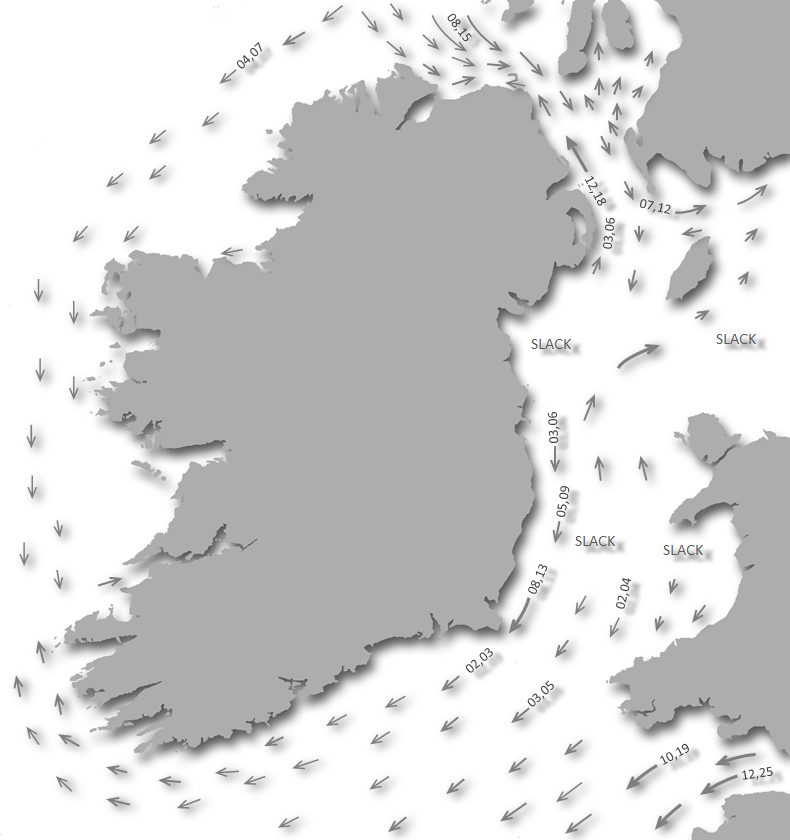


What are the key points of the approach?
 .
.- Approaches to Belfast Lough can be found in the Bangor Harbour
 entry.
 - Track into the Fairway Light buoy through Belfast Lough's open navigable area that is free of dangers.
- Once the harbour is identified proceed towards the marina entrance or by night toward the Directional Light located 30 metres west of the entrance.
Not what you need?
- Greenisland - 1.7 nautical miles SW
- Newtownabbey - 2.7 nautical miles SW
- Cultra - 2.9 nautical miles S
- Helen’s Bay - 3.4 nautical miles SE
- Whitehead - 4.4 nautical miles ENE
- Bangor Harbour & Marina - 5.5 nautical miles ESE
- Ballyholme Bay - 6.1 nautical miles ESE
- Magheramorne Point - 6.7 nautical miles NNE
- Mill Bay - 7 nautical miles NNE
- Groomsport - 7 nautical miles ESE
- Greenisland - 1.7 miles SW
- Newtownabbey - 2.7 miles SW
- Cultra - 2.9 miles S
- Helen’s Bay - 3.4 miles SE
- Whitehead - 4.4 miles ENE
- Bangor Harbour & Marina - 5.5 miles ESE
- Ballyholme Bay - 6.1 miles ESE
- Magheramorne Point - 6.7 miles NNE
- Mill Bay - 7 miles NNE
- Groomsport - 7 miles ESE


What's the story here?
 Carrickfergus Harbour and Marina
Image: Michael Harpur
Carrickfergus Harbour and marina are situated on the north shore of Belfast Lough just over five miles to the southwest of Black Head and the same distance northwest of Bangor Harbour on the opposite shore of the Lough. Overlooked by its signature Norman castle the town was one of Ireland’s largest 16th-century ports. Today it is a centre for leisure craft and a bustling suburb of Belfast. The harbour is divided by its central boatyard with Carrickfergus Harbour with its castle and breakwaters to the east and Carrickfergus Marina immediately to the west.
 Carrickfergus Harbour is restricted to berth holders, customers of the boatyard
or those using the slipway
Image: Michael Harpur
Carrickfergus Marina accommodates visiting boats as Carrickfergus Harbour is restricted to resident berth holders, customers of Carrick Marine Projects boatyard or for the use of the slipway with prior arrangement with the Harbour Master.
 Carrickfergus Marina accommodates visiting vessels
Image: Michael Harpur
The 280-berth Carrickfergus Marina is entered about 400 metres westward of the entrance to the Carrickfergus Harbour. The marina basin has 280 fully serviced berths to accommodate vessels from 6 – 18 metres LOA carrying up to 2.3 metres LAT. The basin is dredged to depths of up to 2.4 metres LAT on the southern berths with the inner berths having 1.9 metres LAT.
 Carrickfergus Marina
Image: Michael Harpur
All visitors must contact Carrickfergus Marina Office in advance on
Ch. 80 / P3 [Carrickfergus Marina], +44 28 9336 6666, marina.reception@midandeastantrim.gov.uk.  The Carrickfergus Harbour Master and launch
Image: Michael Harpur
The marina and harbour entrances are prone to silting making depths unreliable and especially so near low water or in swell conditions. So it is advisable for those visitors who have deeper draughts to check the latest depths in the entrances when contacting Carrickfergus Marina Office.
How to get in?
 Carrickfergus Harbour and Marina on the north shore of Belfast Lough
Image: Michael Harpur
 Use Ireland’s coastal overview for Malin Head to Strangford Lough and the approaches to the Lough are available the Bangor Harbour entry. Carrickfergus Castle, 27 metres high and sitting on a rocky promontory overlooking the seafront, is on the east side of the harbour at the root of the pier. It will be highly conspicuous from anywhere in the bay on a clear day. A prominent radar tower, 9 metres high, stands near the head of the eastern breakwater and a church, with a prominent spire, stands close northwest of the castle.
 Carrickfergus Harbour and the Killroot Power Station
Image: Michael Harpur
These and the 205 metres high tall chimney of the Killroot Power Station chimney, located a little over 1½ miles to the northeast, will serve to make its location obvious.
 Belfast Lough's Fairway Light buoy
Image: © Alan Geddes
Those hugging the northern shoreline between Black Head and Carrickfergus will pass outside a vertical black basaltic rock cliff face that is fronted with three lit jetties that are associated with Kilroot Power Station.
The first is the vast Cloghan Oil Terminal Jetty that dominates the coast which was built in the 1980s as the means to get oil for the Kilroot and Ballylumford power stations. It is located to the south of the easily identifiable 90 metres high white limestone cliffs of White Head, 1½ miles inside Belfast Lough to the south by southwest.
This jetty extends out from the shore for ⅔ of a mile and is lit at the end FlG 3s 2M. Beyond the pierhead is a green buoy, QG.0.5M, which lies a ½ mile off the pier head. Next is the 350 metres long Salt Jetty off Kilroot, with a light Oc G 10s on its outer end. 0.75M W of the jetty is a 198 metres high chimney marked by red vertical lights. Finally, there is the Kilroot Jetty unloading berth marked by 2 FG (vert) 6m 2M lights.
 The vast Cloghan Oil Terminal Jetty as seen from Black Head
Image: Conall via CC BY 3.0
It is best to keep offshore between Kilroot and Carrickfergus as an extensive drying flat of sand and stones extends up to a ½ mile out from the shore here.
 The entrance to the marina and the directional light 30 metres westward
Image: Michael Harpur
 From the initial fix the entrance to Carrickfergus Marina lies 1 mile away on a bearing 320° T. This is towards the triangular Marina West Breakwater Marina Entrance Approach Directional Light situated about 30 metres inside the head of the western breakwater. By night, stay in the white sector.
 Entrance Approach Dir Lit - Dir OC. WRG. 3s5m3M position: 54° 42.586' N 005° 48.740' W
The light has a total beam width of 24° sectored, 9.5° Red, 5° White, 9.5° Green with the initial fix leading into the white sector centre approach line to the entrance.
The entrance to the marina is between the heads of its two rubble breakwaters, at the eastern end of the marina basin and it opens to the southwest. The ends of the two breakwaters are marked with red and green beacons showing Q.Fl.R7M3m and Q.G8m3M, red not showing from 245° to 305° T. When using the leading lights the entrance will not open up until the vessel is nearly opposite the east breakwater to starboard.
 Carrickfergus Marina Plan
Image: Michael Harpur
Turn sharply to starboard at the entrance, to round the east breakwater, and come into the outer entrance. Then turn to port to round the western pierheads breakwater to enter the basin. Vessels should keep mid-channel on approach as drying rocks extend to the southwest from the west marina breakwater.
Upon arrival berth as directed by the Marina Office in advance.  Yachts berthed in Carrickfergus Marina
Image: Michael Harpur
Those who have made arrangements with the Harbour Master or the boatyard in Carrickfergus Harbour, close eastward and overlooked by the conspicuous Carrickfergus Castle, should take a course of 330° T from the initial fix to the harbour entrance.
 The entrance to Carrickfergus Harbour
Image: Michael Harpur
The entrance to Carrickfergus Harbour is open to the south and is dredged to 2.4 metres LAT. The ends of the east and west piers are marked with red and green beacons showing Fl.R7.5s5m4M and Fl.G7.5s5m4M. The eastern head of Carrickfergus harbour has a conspicuous radar tower, now derelict, that can be seen for some distance. Those entering the harbour will find the southern section has depths of 2.9 metres but the north side underneath the castle dries.
 The isolated tubular piles within the entrance
Image: Michael Harpur
Navigational marks are located within the harbour defining the approach to the harbour basin. There are isolated tubular piles in the central harbour area. They are painted port and starboard and should be left on approach to the inner harbour berths according to their colour.
 The marine services site, harbour master's and local resident berths
Image: Michael Harpur
Pass between two navigation posts marking the end of the internal breakwater and revetment. Turn to port to approach pontoons and the marine services site leaving the second breakwater perch to port.
 Carrickfergus Harbour's berths
Image: Michael Harpur
The harbour’s Marine Services facilities are located at the southern end of the western Alexandra Pier, as is a purpose-built Marina basin accommodating 10 boats on pontoon berths behind a rubble-stone breakwater. This basin is partly dredged to give depths of up to 2.9 metres LAT.
 Berths alongside in Carrickfergus Harbour
Image: Michael Harpur
Carrickfergus Harbour also has an inner harbour area accommodating up to 36 boats that can 'take-to-the-bottom' at low water. The inner north-eastern harbour area behind King William's Pier dries, as does about halfway along the eastern Albert Edward pier. Once again all the berths of Carrickfergus Harbour are restricted to resident berth holders, customers of Carrick Marine Projects boatyard or the use of the slipway, with prior arrangement with the Harbour Master. Do not enter Carrickfergus Harbour unless you have made specific arrangements with the Harbour Master or boatyard.
Why visit here?
Carrickfergus derives its name from the Gaelic 'Carraig Fhearghais' meaning the 'rock of Fergus'. The 'Carraig' or 'rock' component of the name refers to the rocky promontory upon which the town's signature Norman castle was built. Carrickfergus as depicted in 1830
Image: Public Domain
The second component is believed to be named after 'Fergus Mór mac Eirc', son of 'Erc', the 6th century king and founder of the joint Irish/Scottish kingdom of 'Dál Riada'. Legend has it that the area took his name after he drowned here.
 A drawing of Carrickfergus Castle from circa 1840
Image: Antiqueportrait via CC BY 3.0
Its story commences in 1177 when the Anglo-Norman knight John De Courcy, the youngest son of a Somerset knight, led an army of 22 knights and 300-foot soldiers into Ulster following Strongbow’s conquest of Leinster. He took the area and soon after his arrival commenced construction of an eastern coastal chain of castles to consolidate his hold. Of these Carrickfergus Castle was the first and most important fortified refuge for the Norman invaders. It is said De Courcy personally chose the site and ordered the construction.
 The crag on which the castle stands is visible today
 Image: Michael Harpur
He was later to consolidate this power base by marrying Affreca, daughter of the King of Man. She founded a Cistercian abbey in 1193 on the eastern shores of Strangford Lough, on the Ards Peninsula. Now called the Greyabbey it was the first in Ireland to be built in the Gothic style. She founded it in thanks for surviving a stormy sea whilst crossing from the Isle of Man and the abbey church remained in use until the 18th century. But De Courcy’s increasing power began to anger King John who sent Hugh de Lacy to remove de Courcy. Hugh de Lacy, Lord of County Meath, defeated de Courcy in 1205 and took Carrickfergus Castle for himself. This was the start of Carrickfergus Castle’s 750 turbulent years of continuous military occupation. The strategically sited castle’s story is one of being attacked, sieged, captured and recaptured numerous times.
In 1315 Edward Bruce invaded Ireland and the combined Scottish and Irish forces defeated the king’s army at the Battle of Connor. The retreating army fell back to Carrickfergus Castle and Edward Bruce laid siege to it. They held out for a full year until they were starved out, reputedly after resorting to eating some of their Scottish prisoners by this time. Edward Bruce retained the castle as his base until his death in the battle at Faughart, near Dundalk, in 1318. It was then retaken by the crown forces when during the later medieval period, a time characterised by the resurgence of the Gaelic Lords, it was often the only fortification of any significance held by the crown in Ulster. In 1575 'Somhairle Buidhe', Sorley Boy Mac Donnell captured the town and castle in revenge for the Earl of Essex’s massacre of 600 people, mostly women and children, on Rathlin Island.
 Greyabbey founded by Affreca who was buried here
Image: Ania via CC BY 2.0
At the start of the 17th Century, Carrickfergus was the only English-speaking town in Ulster but this was about to change with the Plantation of Ulster that would transform the area. In 1689 the Jacobite garrison surrendered the castle to the Williamite general, Frederick Schomberg, who had landed at Groomsport, on the opposite shore, and marched on the town. Carrickfergus then provided a secure port for William of Orange to land his army the following year. Combining his army with that of Schomberg’s forces, they went on to win the decisive Battle of the Boyne on July 12th, 1690 which would put an end to James’ ambitions for the English Crown and secure William’s. But not all events ended well for the English in this bastion of British rule.
 The castle would have perfectly controlled harbour
Image: Michael Harpur
In 1760 three French warships entered Belfast Bay with 800 men. They landed at Kilroot and the attack on Carrickfergus castle was an extraordinarily close and heroic battle. When the defenders, five officers and 230 men, ran out of ammunition they used their coat buttons as musket balls. Once these were exhausted the fighting descended into hand-to-hand combat before the garrison was finally forced to surrender. The French leader, Commodore Thurot, was so impressed with the courage of the English that he allowed the officers to march out carrying their swords and the remainder of the garrison trooping the regimental colours. This would be the final time that Carrickfergus Castle would be taken.
 A life-size statue of King William III outside the castle
Image: Michael Harpur
Eighteen years later, in 1778, the American naval hero John Paul Jones, commanding the American privateer ship Ranger (the first ever to fly the Stars-and-Stripes), was to engage the British warship HMS Drake off Belfast Lough. The combatants were very close together but just out of grappling range as Jones feared the Drake had extra men hidden below decks. In addition to the ship's guns, both sides were firing small arms at each other which would prove decisive. The Drake killed just one of Jones's crew by musket fire and another two from up the masts as a by-product of a broadside. Four of Drake’s crew were killed including, just under an hour into the fight, the ship’s commander Captain Burdon who was struck on the head by a musket ball. With both the captain and lieutenant out of action, the command of Drake passed to a junior officer. By this stage the Drake’s sails and rigging had been shot away by broadsides leaving the vessel a helpless sitting target. More or less immobilised and under a constant hail of musket fire, the Drake surrendered.
 Carrickfergus Castle would see 750 years of continuous military occupation
Image: Michael Harpur
When Jones’ ship passed Carrickfergus the inhabitants stood on the waterfront and cheered his victory, demonstrating their support for the American Revolution. Jones went on to evade capture and deliver Drake to Brest, France, as his prize on 8th May 1778. A long way from home this was the first, and most decisive, American victory over any Royal Navy vessel in British waters. It also stands as the first naval victory of America's fledgeling navy fleet.
 Privateer ship Ranger flying the Stars-and-Stripes
Image: Public Domain
Carrickfergus’s connection with America extends beyond John Paul Jones' improbable victory. The parents of America’s seventh president, Andrew Jackson (1829–1837), came from just outside the town and Jackson’s parents left for America in 1765, just two years before his birth.
 John Paul Jones as drawn in 1780
Image: Public Domain
Today it is one of the best-preserved Norman castles in Ireland. The castle’s vibrant past is illustrated today through life-size models of historic figures dotted through the interiors. A museum may be found in the keep with exhibitions that provide an insight into medieval life including a banqueting hall with medieval clothes on display.
The town has many other points of historic interest such as the present Church of Ireland church of St Nicholas. This was built by John de Courcy in 1182 and it is believed that a church may have existed there beforehand. It was remodelled at the start of the Plantation in 1614 and sadly none of the original building now survives. A good part of the old town's medieval walls is still in evidence with the handsomely restored North Gate being particularly noteworthy.
 The original church of St Nicholas was built by John de Courcy
Image: Ardfern via CC BY SA 2.0
The original ancestral thatched cottage of the parents of Andrew Jackson was demolished in 1860 but a thatched replica, complete with fireplace and 18th-century furnishings, has been re-established in its place. The adjoining small museum 'The Andrew Jackson Cottage and U.S. Rangers Centre' tells the tale of the U.S. president and the US Rangers. It is open all year round but access is by arrangement through the Carrickfergus tourist office.
 General Andrew Jackson stands on the parapet during The Battle of New Orleans
Image: Public Domain
The town's 18th-century houses are also highly attractive and it retains Ireland's only surviving fully restored coal gasworks. The 'Timeless Trail' can be relied upon to guide walkers around the essential historic sights of the town. At the end of which is 'Dobbins Inn' on High Street, which has been a hotel and watering hole for more than three centuries and is a good spot to settle a thirst. Visitors intending on visiting near the end of July should try to coincide their visit with the annual 'Lughnasa' festival, a lively medieval-costume entertainment.
 Carrickfergus Marina provides a safe berth with all facilities needed close
ashore
Image: Michael Harpur
With such a historic legacy and with Carrickfergus Castle standing to the east of the harbour, Carrickfergus wears its past proudly. Overlooking the seafront, the castle is a beacon for approaching mariners. Yet for most people, the town will perhaps be most famous for being the subject of the classic Irish folk song 'Carrickfergus'. This 19th-century translation of an Irish-language song 'Do Bhí Bean Uasal' opens with the line "I wish I was, in Carrickfergus" and is perhaps one of Ireland’s finest ballads.
 Carrickfergus Castle as seen at dusk
Image: Tourism Ireland
From a boating point of view, Carrickfergus has it all. Perfect shelter, 24/7 hazard-free access at any state of the tide. The harbour's boatyard repair, lift-out and refuelling facility, located on the southern end of the west pier can take care of any boat needs. After that, the large town, that is part of the Belfast Metropolitan Area has something for everyone. The fully serviced marina is close to a hub of waterfront restaurants, entertainment and shops. Along with the town's history to explore, there are some lovely parks, gardens and scenic walks, and great golf courses to explore. All of which have made it a sailing centre that attracts leisure sailors year after year who return to enjoy this pretty town that is steeped in history.
What facilities are available?
Drinking water and electricity – a daily charge for visitors - are provided to all berths 24hrs daily, and toilets & showers with full services are available in the exclusive berth holders’ area. Separate disabled shower/toilet facilities are also available. A laundry service is available at Marina reception during the hours of 8am-4pm. There is a fuel berth and pump-out station and chemical toilet disposal unit on the visitors' pontoon within the Marina basin. Two public payphones are situated at the marina building, and there are restaurants and bars in the Waterfront complex, or in the town. Carrickfergus Sailing Club has its clubhouse on the east side of the Marina and welcomes visiting yachtsmen. It also has showers and a bar that is open most evenings, and also at weekends when meals are available.A comprehensive range of marine services are available in Carrickfergus, including a 45 tonne Travel Hoist, hard standing, chandlery, boat and engine and electric repairs, plus cabin soft furnishings made to order. A slipway that can take boats up to 1.5 metres of draught is available within the Harbour area and can be used by arrangement through the Marina Office. The slipway may be accessed 2hrs +- HW (dependent on draft) - please note the presence of isolated tubular piles in the central harbour area and leave these piles to port on approach to the harbour slipway from the lough.
With a population of over 27,000 people, the town has excellent shopping facilities and there are several hotels and restaurants in the immediate area of the Waterfront Complex. It has good road and rail communications with Belfast which is 18 km (11 miles) away with access to its international Airports, and taxis are freely available.
Any security concerns?
The marina is a secure complex with security and reception 24 hours a day. Pontoon access is via personalised swipe cards that are provided to visitors at the time of registering their visit. CCTV is in operation throughout the marina complex and security officers patrol during the night.With thanks to:
Ryan Hack Harbour Master for Carrickfergus Marina and Harbour. Terence Stitt, Portmuck Harbour Master and Julie Ferguson Customer Services Officer (Carrickfergus Marina).Scenes of Carrickfergus
Aerial views of the harbour and the castle (with a lot of wind noise)
About Carrickfergus Harbour & Marina
Carrickfergus derives its name from the Gaelic 'Carraig Fhearghais' meaning the 'rock of Fergus'. The 'Carraig' or 'rock' component of the name refers to the rocky promontory upon which the town's signature Norman castle was built.
Carrickfergus as depicted in 1830Image: Public Domain
The second component is believed to be named after 'Fergus Mór mac Eirc', son of 'Erc', the 6th century king and founder of the joint Irish/Scottish kingdom of 'Dál Riada'. Legend has it that the area took his name after he drowned here.
A drawing of Carrickfergus Castle from circa 1840Image: Antiqueportrait via CC BY 3.0
Its story commences in 1177 when the Anglo-Norman knight John De Courcy, the youngest son of a Somerset knight, led an army of 22 knights and 300-foot soldiers into Ulster following Strongbow’s conquest of Leinster. He took the area and soon after his arrival commenced construction of an eastern coastal chain of castles to consolidate his hold. Of these Carrickfergus Castle was the first and most important fortified refuge for the Norman invaders. It is said De Courcy personally chose the site and ordered the construction.
The crag on which the castle stands is visible today Image: Michael Harpur
He was later to consolidate this power base by marrying Affreca, daughter of the King of Man. She founded a Cistercian abbey in 1193 on the eastern shores of Strangford Lough, on the Ards Peninsula. Now called the Greyabbey it was the first in Ireland to be built in the Gothic style. She founded it in thanks for surviving a stormy sea whilst crossing from the Isle of Man and the abbey church remained in use until the 18th century. But De Courcy’s increasing power began to anger King John who sent Hugh de Lacy to remove de Courcy. Hugh de Lacy, Lord of County Meath, defeated de Courcy in 1205 and took Carrickfergus Castle for himself. This was the start of Carrickfergus Castle’s 750 turbulent years of continuous military occupation. The strategically sited castle’s story is one of being attacked, sieged, captured and recaptured numerous times.
In 1315 Edward Bruce invaded Ireland and the combined Scottish and Irish forces defeated the king’s army at the Battle of Connor. The retreating army fell back to Carrickfergus Castle and Edward Bruce laid siege to it. They held out for a full year until they were starved out, reputedly after resorting to eating some of their Scottish prisoners by this time. Edward Bruce retained the castle as his base until his death in the battle at Faughart, near Dundalk, in 1318. It was then retaken by the crown forces when during the later medieval period, a time characterised by the resurgence of the Gaelic Lords, it was often the only fortification of any significance held by the crown in Ulster. In 1575 'Somhairle Buidhe', Sorley Boy Mac Donnell captured the town and castle in revenge for the Earl of Essex’s massacre of 600 people, mostly women and children, on Rathlin Island.
Greyabbey founded by Affreca who was buried hereImage: Ania via CC BY 2.0
At the start of the 17th Century, Carrickfergus was the only English-speaking town in Ulster but this was about to change with the Plantation of Ulster that would transform the area. In 1689 the Jacobite garrison surrendered the castle to the Williamite general, Frederick Schomberg, who had landed at Groomsport, on the opposite shore, and marched on the town. Carrickfergus then provided a secure port for William of Orange to land his army the following year. Combining his army with that of Schomberg’s forces, they went on to win the decisive Battle of the Boyne on July 12th, 1690 which would put an end to James’ ambitions for the English Crown and secure William’s. But not all events ended well for the English in this bastion of British rule.
The castle would have perfectly controlled harbourImage: Michael Harpur
In 1760 three French warships entered Belfast Bay with 800 men. They landed at Kilroot and the attack on Carrickfergus castle was an extraordinarily close and heroic battle. When the defenders, five officers and 230 men, ran out of ammunition they used their coat buttons as musket balls. Once these were exhausted the fighting descended into hand-to-hand combat before the garrison was finally forced to surrender. The French leader, Commodore Thurot, was so impressed with the courage of the English that he allowed the officers to march out carrying their swords and the remainder of the garrison trooping the regimental colours. This would be the final time that Carrickfergus Castle would be taken.
A life-size statue of King William III outside the castleImage: Michael Harpur
Eighteen years later, in 1778, the American naval hero John Paul Jones, commanding the American privateer ship Ranger (the first ever to fly the Stars-and-Stripes), was to engage the British warship HMS Drake off Belfast Lough. The combatants were very close together but just out of grappling range as Jones feared the Drake had extra men hidden below decks. In addition to the ship's guns, both sides were firing small arms at each other which would prove decisive. The Drake killed just one of Jones's crew by musket fire and another two from up the masts as a by-product of a broadside. Four of Drake’s crew were killed including, just under an hour into the fight, the ship’s commander Captain Burdon who was struck on the head by a musket ball. With both the captain and lieutenant out of action, the command of Drake passed to a junior officer. By this stage the Drake’s sails and rigging had been shot away by broadsides leaving the vessel a helpless sitting target. More or less immobilised and under a constant hail of musket fire, the Drake surrendered.
Carrickfergus Castle would see 750 years of continuous military occupationImage: Michael Harpur
When Jones’ ship passed Carrickfergus the inhabitants stood on the waterfront and cheered his victory, demonstrating their support for the American Revolution. Jones went on to evade capture and deliver Drake to Brest, France, as his prize on 8th May 1778. A long way from home this was the first, and most decisive, American victory over any Royal Navy vessel in British waters. It also stands as the first naval victory of America's fledgeling navy fleet.
Privateer ship Ranger flying the Stars-and-StripesImage: Public Domain
Carrickfergus’s connection with America extends beyond John Paul Jones' improbable victory. The parents of America’s seventh president, Andrew Jackson (1829–1837), came from just outside the town and Jackson’s parents left for America in 1765, just two years before his birth.
John Paul Jones as drawn in 1780Image: Public Domain
Today it is one of the best-preserved Norman castles in Ireland. The castle’s vibrant past is illustrated today through life-size models of historic figures dotted through the interiors. A museum may be found in the keep with exhibitions that provide an insight into medieval life including a banqueting hall with medieval clothes on display.
The town has many other points of historic interest such as the present Church of Ireland church of St Nicholas. This was built by John de Courcy in 1182 and it is believed that a church may have existed there beforehand. It was remodelled at the start of the Plantation in 1614 and sadly none of the original building now survives. A good part of the old town's medieval walls is still in evidence with the handsomely restored North Gate being particularly noteworthy.
The original church of St Nicholas was built by John de CourcyImage: Ardfern via CC BY SA 2.0
The original ancestral thatched cottage of the parents of Andrew Jackson was demolished in 1860 but a thatched replica, complete with fireplace and 18th-century furnishings, has been re-established in its place. The adjoining small museum 'The Andrew Jackson Cottage and U.S. Rangers Centre' tells the tale of the U.S. president and the US Rangers. It is open all year round but access is by arrangement through the Carrickfergus tourist office.
General Andrew Jackson stands on the parapet during The Battle of New OrleansImage: Public Domain
The town's 18th-century houses are also highly attractive and it retains Ireland's only surviving fully restored coal gasworks. The 'Timeless Trail' can be relied upon to guide walkers around the essential historic sights of the town. At the end of which is 'Dobbins Inn' on High Street, which has been a hotel and watering hole for more than three centuries and is a good spot to settle a thirst. Visitors intending on visiting near the end of July should try to coincide their visit with the annual 'Lughnasa' festival, a lively medieval-costume entertainment.
Carrickfergus Marina provides a safe berth with all facilities needed closeashore
Image: Michael Harpur
With such a historic legacy and with Carrickfergus Castle standing to the east of the harbour, Carrickfergus wears its past proudly. Overlooking the seafront, the castle is a beacon for approaching mariners. Yet for most people, the town will perhaps be most famous for being the subject of the classic Irish folk song 'Carrickfergus'. This 19th-century translation of an Irish-language song 'Do Bhí Bean Uasal' opens with the line "I wish I was, in Carrickfergus" and is perhaps one of Ireland’s finest ballads.
Carrickfergus Castle as seen at duskImage: Tourism Ireland
From a boating point of view, Carrickfergus has it all. Perfect shelter, 24/7 hazard-free access at any state of the tide. The harbour's boatyard repair, lift-out and refuelling facility, located on the southern end of the west pier can take care of any boat needs. After that, the large town, that is part of the Belfast Metropolitan Area has something for everyone. The fully serviced marina is close to a hub of waterfront restaurants, entertainment and shops. Along with the town's history to explore, there are some lovely parks, gardens and scenic walks, and great golf courses to explore. All of which have made it a sailing centre that attracts leisure sailors year after year who return to enjoy this pretty town that is steeped in history.
Other options in this area
Newtownabbey - 1.7 miles SW
Belfast Harbour - 4.5 miles SSW
Cultra - 1.8 miles S
Helen’s Bay - 2.1 miles SE
Portmuck - 5.4 miles NNE
Brown’s Bay - 5.5 miles N
Ferris Bay - 5.3 miles N
Larne Harbour - 4.9 miles N
Navigational pictures
These additional images feature in the 'How to get in' section of our detailed view for Carrickfergus Harbour & Marina.


| Detail view | Off |
| Picture view | On |
Scenes of Carrickfergus
Aerial views of the harbour and the castle (with a lot of wind noise)
 A photograph is worth a thousand words. We are always looking for bright sunny photographs that show this haven and its identifiable features at its best. If you have some images that we could use please upload them here. All we need to know is how you would like to be credited for your work and a brief description of the image if it is not readily apparent. If you would like us to add a hyperlink from the image that goes back to your site please include the desired link and we will be delighted to that for you.
Add your review or comment:
Ron Lub wrote this review on Jun 19th 2019:
Good friendly harbour 2.60 mtr pay for one night get a seccond night free.
very friendly helpful staff.
good place to visit the Gobbins (train) electric not free but you pay 0.10 Kw, very clean showers and also a big bath!


Please log in to leave a review of this haven.
Please note eOceanic makes no guarantee of the validity of this information, we have not visited this haven and do not have first-hand experience to qualify the data. Although the contributors are vetted by peer review as practised authorities, they are in no way, whatsoever, responsible for the accuracy of their contributions. It is essential that you thoroughly check the accuracy and suitability for your vessel of any waypoints offered in any context plus the precision of your GPS. Any data provided on this page is entirely used at your own risk and you must read our legal page if you view data on this site. Free to use sea charts courtesy of Navionics.