

What is the issue?
Sailing is a world of knots, bends, hitches, loops etc. The bowline is the king of the multi-purpose knots, and the one to learn first. But although functional in almost every circumstance it can be cumbersome in many situations.Why address this?
Once the bowline is securely under your belt there are a few knots that are worth learning next for optimised approaches to specific recurring tasks aboard.How to address this?
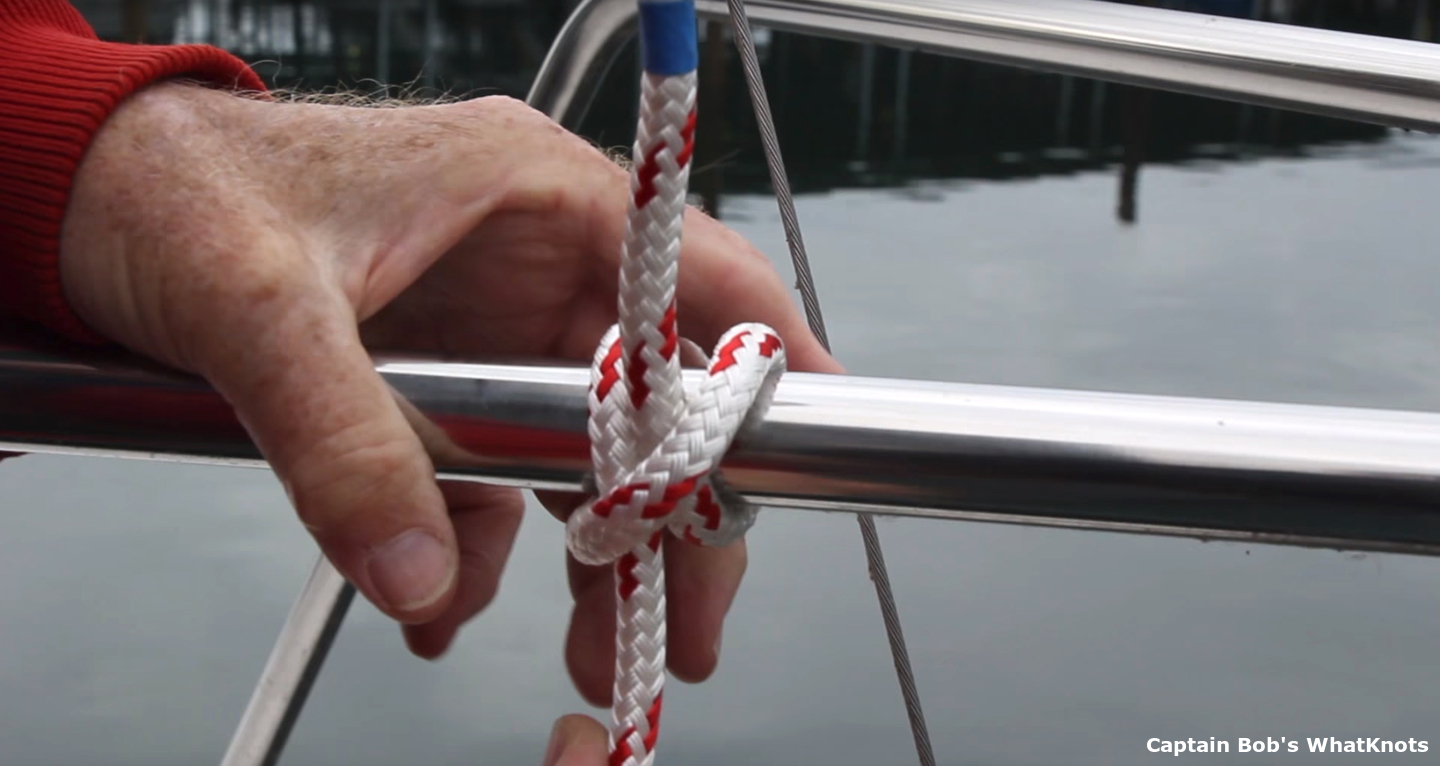
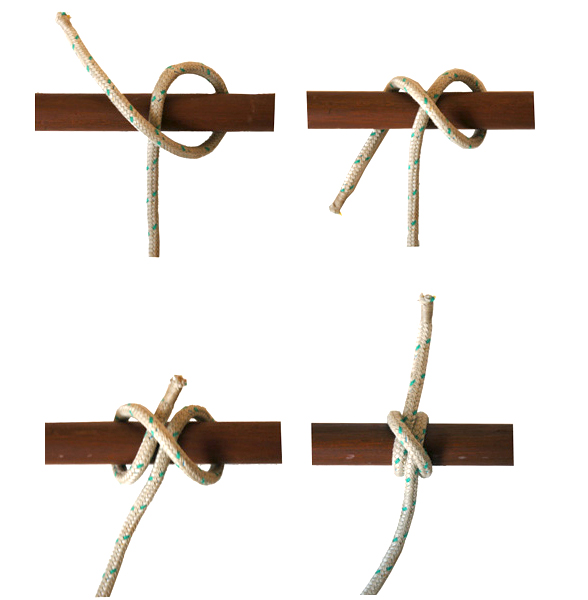
Learn the clove hitch which is a very simple but highly useful knot aboard. The clove hitch comprises two successive half-hitches around an object. Along with the bowline and the sheet bend, the clove hitch is often considered one of the most important knots and is commonly referred to as a Double Hitch. The Clove Hitch or Double Hitch
Drawing: Michael Harpur
Although convenient, the clove hitch also comes with disadvantages. It is difficult to tie down tightly or when under a load, and with certain types of cord the clove hitch can slip when loaded or unroll when very lightly loaded. This can be mitigated however by adding an additional half hitch.
With smaller diameter cords, after being heavily weighted they may become difficult to untie, and with heavier lines the clove hitch tends to slip up to a point and then stop slipping. It is also best fixed to round objects and is unreliable when used on a square or rectangular post.
That said it is nevertheless a most useful knot that is very easy to learn and well worth acquiring the knack.
With thanks to:
Michael Harpur, Yacht ObsessionTying a Clove Hitch with a Half Hitch
 A photograph is worth a thousand words. We are always looking for bright sunny photographs that illustrate this experience. If you have some images that we could use please upload them here. All we need to know is how you would like to be credited for your work and a brief description of the image if it is not readily apparent. If you would like us to add a hyperlink from the image that goes back to your site please include the desired link and we will be delighted to that for you.
Add your review or comment:
Please log in to leave a review of this tip.
eOceanic makes no guarantee of the validity of this information, you must read our legal page. However, we ask you to help us increase accuracy. If you spot an inaccuracy or an omission on this page please contact us and we will be delighted to rectify it. Don't forget to help us by sharing your own experience.